The World Cup kicks off today. Here's who actually gets paid.
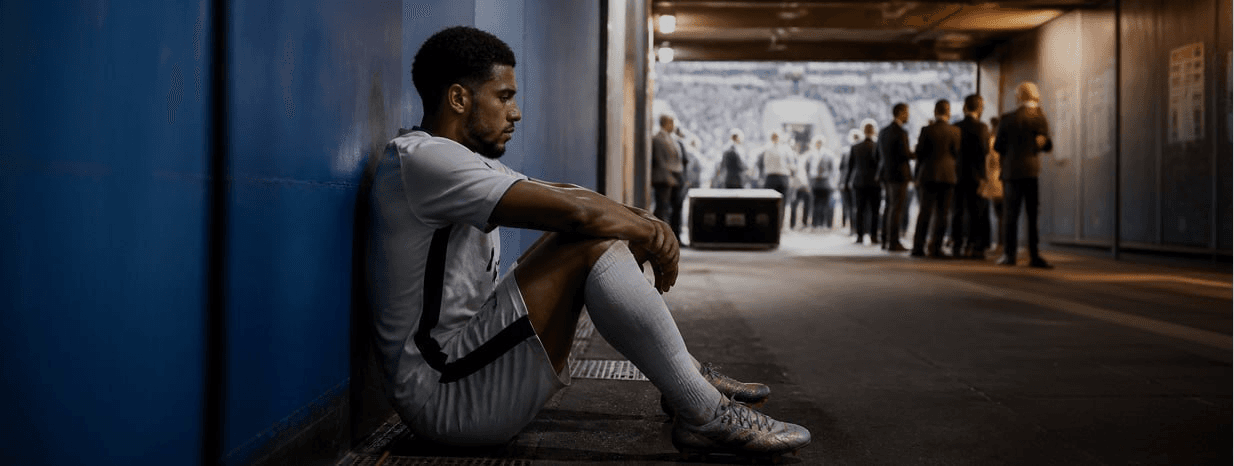
The most-watched sporting event on the planet starts today. Billions will tune in. FIFA will distribute a record $727 million across the tournament. And most of the players running themselves into the ground to produce it will see almost none of it.
That disconnect is worth understanding before the first whistle blows.
How FIFA distributes the money
FIFA is paying out a record $655 million in prize money at the 2026 World Cup, a 50% increase from the $440 million distributed at Qatar 2022. The winning federation takes home $50 million. Even teams eliminated in the group stage receive $9 million.
The key word there is federation.
FIFA does not pay players directly. It pays national associations, which then decide how much of that money, if any, reaches the athletes. Some federations split a percentage with their squads. Others route the majority back into administrative costs, development programs, or federation operations. There is no universal standard. Two players at the same tournament can walk away with vastly different payouts depending entirely on which flag they play under.
On top of federation prize money, FIFA has set aside a separate $355 million for clubs whose players are released for the tournament. That is a record 70% increase from Qatar 2022, and for the first time, clubs are compensated not just for the final tournament but for qualifying matches too. A per-player daily rate of approximately $5,000 applies for every day a player remains with their national team.
That money goes to clubs. Not to the players.
The players' union response
FIFPRO, the global players' union representing more than 77,000 professional footballers, was vocal heading into this tournament. At a meeting convened in Manchester in the weeks prior, FIFPRO and the PFA brought together union leaders from across the sport to address what they called a widening gap: record revenues at the top of the game, persistent precariousness for the majority of professional players below it.
The concern is structural. Club football revenues have grown substantially over the past 15 years. The 2026 World Cup is the most commercially lucrative edition in history. Yet the player share of those revenues has not kept pace.
What most players at the World Cup actually earn
The 1,104 players at the 2026 World Cup represent 48 nations. Their earnings vary enormously. Cristiano Ronaldo, playing for Portugal, made an estimated $300 million this year according to Forbes. Lionel Messi earned around $140 million. These players have club contracts, global endorsement deals, and personal brands worth billions.
But for every Ronaldo and Messi, there are dozens of players whose annual club salary is modest by any measure, and whose only income from the World Cup depends on what their federation chooses to hand over from FIFA's payout.
For smaller footballing nations, even reaching the group stage unlocks $9 million for the federation. Whether any of that meaningfully reaches the players on the pitch is not guaranteed.
The platform question this raises
The World Cup exposes something the sports industry quietly knows but rarely says out loud: the relationship between athletic performance and athlete compensation is not as direct as fans assume. The value created on the pitch flows through layers of governing bodies, federations, agents, clubs, and commercial partners before it ever reaches the person who created it.
That gap is what platforms like Thravos are built to close. Not for national team players navigating FIFA's prize money structure, but for the much larger universe of athletes who compete, train, build audiences, and generate real engagement value with no mechanism to monetize it directly.
The World Cup is the most visible version of a dynamic that plays out across every sport, at every level. The athletes are the product. The question is whether they get to participate in the economics of what they produce.
Join the Thravos movement
Join the Thravos revolution! We're building a vibrant community where everyone is welcome. Bring your friends, family, and even your neighbors! Together, we can create a healthier and happier future.
Get started today!
Follow us on social media: Stay connected with the latest news and updates on Twitter, Discord, and Telegram.
Disclaimer: This post may include forward-looking statements based on current expectations, plans, or projections. Actual results may differ due to various factors beyond our control. Readers are encouraged to conduct their own research and use independent judgment when interpreting the information provided. All content is for informational purposes only and should not be considered professional advice.